
Author: BCI Step by Step

EVIDENCE OF KNOWING GOD
1 John 2:3-11
(3) And hereby we do know that we know him, if we keep his commandments.
(4) He that saith, I know him, and keepeth not his commandments, is a liar, and the truth is not in him.
(5) But whoso keepeth his word, in him verily is the love of God perfected: hereby know we that we are in him.
(6) He that saith he abideth in him ought himself also so to walk, even as he walked.
(7) Brethren, I write no new commandment unto you, but an old commandment which ye had from the beginning. The old commandment is the word which ye have heard from the beginning.
(9) He that saith he is in the light, and hateth his brother, is in darkness even until now.
(10) He that loveth his brother abideth in the light, and there is none occasion of stumbling in him.
(11) But he that hateth his brother is in darkness, and walketh in darkness, and knoweth not whither he goeth, because that darkness hath blinded his eyes.
Text: 1 John 2:3–11
Introduction
- Every believer desires assurance—How do I know that I truly know God?
- John answers this question in 1 John 2:3–11.
- He shows us that knowing God is not about mere words or feelings, but about obedience, walking like Christ, and loving others.
- This passage is both a test and an encouragement: it reveals whether our faith is genuine and points us toward the light of Christ.
I. Evidence of Knowing God (vv. 3–5a)
“Hereby we do know that we know him, if we keep his commandments.”
Key Point: True knowledge of God is demonstrated by obedience.
Sub-points:
Obedience is not optional but essential.
- It is not essential for our salvation, but for our growth. (2 Peter 3:18)
- It is a manifestation of true relationship with God. (John 14:15)
- It is a proof that we truly understand the truth.
Claiming to know God without obedience is self-deception. James 1:22
- You claim to be a Christian, but you do not obey His word.
- You hear the word preached, but ignore it, thinking it is for others.
- You think you know a lot, but you do not apply the truth.
God’s love is perfected in those who obey.
(5) But whoso keepeth his word, in him verily is the love of God perfected: hereby know we that we are in him.
What “Love of God Perfected” means.
- The phrase points to the maturing and growth of God’s love in the believer’s life. It’s not about God’s love being incomplete, but about His love reaching its intended goal in us.
- Obedience as the proof of love When we keep God’s Word, our obedience shows that His love is not just received but is actively shaping us. Love is perfected when it moves from theory to practice.
- Perfected = brought to maturity / completion The Greek word teleioō means “to bring to completion, to accomplish, to mature.”
- God’s love is “perfected” when it accomplishes its purpose—transforming us into Christlike obedience and love.
- Love in action – It’s not enough to say “I love God.”
- Love is perfected when it expresses itself in obedience, humility, and love toward others. This is the visible fruit of God’s love at work.
Though I speak with the tongues of men and of angels, and have not charity, I am become as sounding brass, or a tinkling cymbal. (1 Corinthians 13:1)
Charity suffereth long, and is kind; charity envieth not; charity vaunteth not itself, is not puffed up, Doth not behave itself unseemly, seeketh not her own, is not easily provoked, thinketh no evil; (1 Corinthians 13:4-5)
And above all things have fervent charity among yourselves: for charity shall cover the multitude of sins. (1 Peter 4:8)
II. Walking as Christ Walked (v. 6)
“He that saith he abideth in him ought himself also so to walk, even as he walked.”
Key Point: Christ is the model of obedience and love.
Sub-points:
Abiding in Christ means imitating His life.
- Jesus is an example of humility (Philippians 2)
- Jesus modeled submission to the Father. “…not my will but thine be done” (Luke 22:42).
Our walk must reflect His humility, compassion, and holiness.
- Ask yourself, “Am I being Christ-like”?
- “Do I act as if I am better than others?”
Discipleship is not just belief but lifestyle.
- Is Jesus seen in your life? (Matthew 5: 16).
- Are you showing a humble, Christ-like character? (Gal.2:20)
III. The Old and New Commandment (vv. 7–8)
“I write no new commandment… Again, a new commandment I write unto you.”
Key Point: Love is both timeless and renewed in Christ.
Sub-points:
Old: Love God and neighbor (Law of Moses).
And thou shalt love the Lord thy God with all thy heart, and with all thy soul, and with all thy mind, and with all thy strength: this is the first commandment. And the second is like, namely this, Thou shalt love thy neighbour as thyself. There is none other commandment greater than these. (Mark 12:30-31)
New: Love as Christ loved (sacrificial, unconditional).
I am crucified with Christ: nevertheless I live; yet not I, but Christ liveth in me: and the life which I now live in the flesh I live by the faith of the Son of God, who loved me, and gave himself for me. (Galatians 2:20)
- Faith in the love of Christ is important.
- Do not think of yourself, or live for yourself, but think of Christ.
For to me to live is Christ, and to die is gain. (Philippians 1:21)
Verily, verily, I say unto you, Except a corn of wheat fall into the ground and die, it abideth alone: but if it die, it bringeth forth much fruit. (John 12:24)
The true light now shines—love is illuminated by Christ’s example.
(8) Again, a new commandment I write unto you, which thing is true in him and in you: because the darkness is past, and the true light now shineth.
- If Christ is truly in you, you will understand the truth.
- You have the Holy Spirit to help you understand.
- Why live in the dark when you have the light shining.
- The true light shineth, that means there is hope and guidance.
- Mahirap maglakad sa dilim, madapa ka.
IV. The Test of Love (vv. 9–11)
“He that saith he is in the light, and hateth his brother, is in darkness even until now.”
Key Point: Love for others is the proof of living in the light.
Sub-points:
Hatred reveals spiritual blindness and darkness.
- Hate is the work of the devil.
- Hatred causes people to do evil.
- Hatred leads to depression, bitterness, and misery.
Loving others shows we abide in the light and avoid stumbling.
- When we choose to love, instead of hate we abide in the light.
- Some people will cause us to hate, when their hearts is full of envy.
- But we must choose to obey God.
- Obedience to God demonstrates our trust in Him.
- Loving others is helping others to grow in Him, avoid stumbling.
- Fall into sin and mistakes.
- Love is concerned for their correction and growth.
- Discipline is love.
The absence of love leads to spiritual darkness and destruction.
- Examine yourself
- To know where you are lacking is growth.
- Growth when you seek God, ask Him to change you.
✨ Conclusion & Application
- To know God is to obey Him.
- To abide in Christ is to walk as He walked.
- To live in the light is to love one another.
- Practical challenge: Examine your obedience, your walk, and your love—are they reflecting Christ?
CEBUANO PREACHING ON EVIDENCE OF KNOWING GOD
Why does God allow people to suffer
Please click the title or link to view the lesson

PERFECTLY JOINED TOGETHER
Preached by E. Jardinel @Prayer Meeting, 12-03-25

Now I beseech you, brethren, by the name of our Lord Jesus Christ, that ye all speak the same thing, and that there be no divisions among you; but that ye be perfectly joined together in the same mind and in the same judgment. (1 Corinthians 1:10)
The church of Corinth, now lying bleeding in the wound:
- Carnality
And I, brethren, could not speak unto you as unto spiritual, but as unto carnal, even as unto babes in Christ. I have fed you with milk, and not with meat: for hitherto ye were not able to bear it, neither yet now are ye able. (1 Corinthians 3:1-2)
- Schism
For ye are yet carnal: for whereas there is among you envying, and strife, and divisions, are ye not carnal, and walk as men? For while one saith, I am of Paul; and another, I am of Apollos; are ye not carnal? (1 Corinthians 3:3-4)
Apostle Paul, applying a solution to the problem as he said: (1 Cor. 1: 10).
BESEECH – To beg for urgently or anxiously; to request earnestly
BRETHREN – One family in the Lord, expresses affection and relationship.
And the next day he shewed himself unto them as they strove, and would have set them at one again, saying, Sirs, ye are brethren; why do ye wrong one to another? (Acts 7:26)
There is concern:
So he sent his brethren away, and they departed: and he said unto them, See that ye fall not out by the way. (Genesis 45:24)
But Paul cried with a loud voice, saying, Do thyself no harm: for we are all here.(Acts 16:28)
I. PAUL APPEALS FOR UNITY IN THE NAME OF CHRIST
Christ’s desire and prayer is unity in the truth (John 17; Psa. 133:1)
- The church is to be the light of the world, Matthew 5: 16.
- The church is to be a testimony to the world.
- The church is to bring the gospel to all nations, Mat. 28: 18-20.
- Church members, working together will accomplish great things. “United we stand, divided we fall”.
- Eph.4: 16 – Like a body that increases its ability.
- Phil. 1: 27 – Striving together for the faith of the gospel.
Disunity brings disadvantages and consequences to the church
- It affects the testimony and influence of the church, Matthew 5: 16
- It causes the church to suffer, discourages the brethren, especially the weak.
1 Cor. 12:21-26
- It slows or hinders the growth and progress, (Gal. 5: 15; 19-23).
Paul urges not by his name but by the name of Christ (1 Cor. 3: 4-5)
- Christ taught love, peace, unity (John 17; 13:35).
- God’s desire, Psalm 133: 1
- God is grieved by division. (Eph.4:30).
- By our love for Jesus. (Mark 12: 30-31; John 14:15)
II. PAUL APPEALS FOR THEM TO SPEAK THE SAME THING.
But speak thou the things which become sound doctrine:(Titus 2:1)
In all things shewing thyself a pattern of good works: in doctrine shewing uncorruptness, gravity, sincerity, Sound speech, that cannot be condemned; that he that is of the contrary part may be ashamed, having no evil thing to say of you. (Titus 2:7-8)
- This requires study of God’s words, 2 Tim. 2: 15, John 5: 39.
- This requires teachability, 2 Tim. 2: 2 ; James 1: 19.
- This requires humility, Phil. 2:2-5
- This requires wisdom, James 3:13-18
- This requires love, Eph. 4: 15, 16, 29, 31-32.
III. PAUL APPEALS TO THEM THAT THEY BE PERFECTLY JOINED TOGETHER.
To be perfectly joined together requires submission.
- Submission to God first of all, James 4: 7; 1:22
- Submission to the leader or pastor, Heb 13: 17; 1 Cor. 16:15-16
- Submission to a leader if he is submissive also to biblical leadership.
- A good leader is a good follower.
- Submission to the husband as it is fit, Eph. 5: 22; 1 Cor. 11:3
- Obedience to Parents in the Lord, Eph. 6:1
- Subjection to government, Romans 13:1-2
To be perfectly joined together requires correction
- The Bible is to correct us, 2 Tim. 3: 16-17.
- Correction will lead to wisdom, maturity, and development of ability. Prov. 10:17; 17:10-11; 9:7-10; 12:1;13:1.
- The duty of the pastor is to preach the word, teach, exhort, rebuke, correct through the word of God. (2 Tim. 4:1-5; Titus 2: 15).
- Members are also to search the Scriptures if the preaching is in the Bible (Acts 17:11; John 5: 39).
To be perfectly joined together requires spirituality
- There is always a struggle between the flesh and the Spirit, Gal. 5: 17.
- We need to walk in the Spirit and not be controlled by the flesh, Gal. 5: 16; Eph. 5: 18.
III. PAUL APPEALS TO THEM TO HAVE THE SAME MIND AND JUDGMENT.
- The Bible speaks of Judge not, Matthew 7: 1-3. 1 Cor. 4:5
- Man is always guilty of making wrong judgment.
- Gossiping, slandering are oftentimes caused by carnality, hatred, envy, jealousy, etc. (Gal. 5:13-17, 20-21)
- It causes conflicts and problems. James 4: 1-3
- The problem of judgmental spirit or critical spirit is lack of maturity.
- Romans 12: 3, James 1: 19; James 2: 13;
- The Bible speaks of righteous judgment, John 7:24
- When leaders make decisions, they are judging. Moses, Solomon.
- The church is also to judge, 1 Cor. 6: 2,3 ; 5: 12 ; Mat 18: 15-17.

I Am Thinking of You

I Am Thinking of You
I’m thinking of you—not just out of friendship or concern, but because there is something truly important I want to share with you.
- Because God cares for your soul.
You are not forgotten. God created you and knows everything about you. He sees your
joys and your struggles. More than anyone else, He cares deeply for your soul. “Casting
all your care upon him; for he careth for you.” (1 Peter 5:7) - Because everyone is lost and is in danger.
The Bible tells us that all have sinned and come short of the glory of God (Romans 3:23).
This sin separates us from God and places us in spiritual danger—deserving judgment.
Whether we realize it or not, we all need saving. - Because God has a provision for man’s sin.
God, in His great love, made a way. He sent His Son, Jesus Christ, to die on the cross for
our sins and rise again, offering us forgiveness and new life. “But God commendeth his
love toward us, in that, while we were yet sinners, Christ died for us.” (Romans 5:8) - Because the greatest gift is salvation.
This gift is not earned by good works or religion—it is offered freely to all who will
believe. “For the wages of sin is death, but the gift of God is eternal life through Jesus
Christ our Lord.” (Romans 6:23)
You can receive this gift by trusting in Jesus as your personal Savior.
I care enough to write to you because your soul matters. Life is uncertain, but God’s promise of
salvation is sure. Will you consider Him today?

LEVELS OF FRIENDSHIP

LEVELS OF FRIENDSHIP
(with Scriptural Support)
1. ACQUAINTANCE
Initial connection and kindness toward others.
- Be alert to new people around you. — “Be not forgetful to entertain strangers: for thereby some have entertained angels unawares.” (Hebrews 13:2)
- Maintain a cheerful and approachable countenance — smile. — “A merry heart maketh a cheerful countenance.” (Proverbs 15:13)
- Learn and remember his name; greet him personally. — “I am the good shepherd, and know my sheep, and am known of mine.” (John 10:14)
- Ask simple, appropriate questions to show acceptance. — “Look not every man on his own things, but every man also on the things of others.” (Philippians 2:4)
- Be a good listener. — “Let every man be swift to hear, slow to speak.” (James 1:19)
- Remind yourself of God’s love and interest for him. — “For God so loved the world…” (John 3:16)
2. CASUAL FRIENDSHIP
Building trust through openness and care.
- Discover his strengths and good qualities. — “Finally, brethren, whatsoever things are true, … honest, … just, … pure, … think on these things.” (Philippians 4:8)
- Learn about his hopes, desires, and goals. — “Counsel in the heart of man is like deep water; but a man of understanding will draw it out.” (Proverbs 20:5)
- Ask thoughtful, personal questions to understand better. — “The purposes of a man’s heart are deep waters, but one who has insight draws them out.” (Proverbs 20:5, NIV)
- Show concern when he shares struggles. — “Bear ye one another’s burdens, and so fulfil the law of Christ.” (Galatians 6:2)
- Be honest about yourself; admit faults when appropriate. — “Confess your faults one to another.” (James 5:16)
- Demonstrate trustworthiness and reliability. — “A friend loveth at all times, and a brother is born for adversity.” (Proverbs 17:17)
- Pray for him and his needs. — “Pray one for another, that ye may be healed.” (James 5:16)
3. CLOSE FRIENDSHIP
Encouraging growth and walking together in life.
- Recognize and affirm his potential. — “And let us consider one another to provoke unto love and to good works.” (Hebrews 10:24)
- Discuss his life goals and purpose. — “Where there is no vision, the people perish.” (Proverbs 29:18)
- Encourage him to pursue these goals. — “Two are better than one; because they have a good reward for their labour.” (Ecclesiastes 4:9)
- Discern obstacles hindering his progress. — “The prudent see danger and take refuge, but the simple keep going and pay the penalty.” (Proverbs 22:3)
- Support him in overcoming challenges. — “Iron sharpeneth iron; so a man sharpeneth the countenance of his friend.” (Proverbs 27:17)
- Inspire and motivate him toward good works. — “And let us not be weary in well doing: for in due season we shall reap, if we faint not.” (Galatians 6:9)
- Encourage with Scripture. — “Thy word is a lamp unto my feet, and a light unto my path.” (Psalm 119:105)
4. INTIMATE FRIENDSHIP
Deep accountability, loyalty, and spiritual sharpening.
- Offer comfort during trials and sorrows. — “Comfort one another with these words.” (1 Thessalonians 4:18)
- Protect his reputation. — “A good name is rather to be chosen than great riches.” (Proverbs 22:1)
- Be sensitive to areas needing growth in both yourself and him. — “Examine yourselves, whether ye be in the faith.” (2 Corinthians 13:5)
- Help identify root causes of weaknesses. — “The heart is deceitful above all things, and desperately wicked: who can know it?” (Jeremiah 17:9)
- Encourage correction and accountability, inviting him to speak into your life also. — “Faithful are the wounds of a friend.” (Proverbs 27:6)
- Search Scripture together for solutions. — “All scripture is given by inspiration of God, and is profitable for doctrine, for reproof, for correction, for instruction in righteousness.” (2 Timothy 3:16)
- Commit to loyalty, faithfulness, and availability. — “A man that hath friends must shew himself friendly: and there is a friend that sticketh closer than a brother.” (Proverbs 18:24)
PRIDE AND SIN
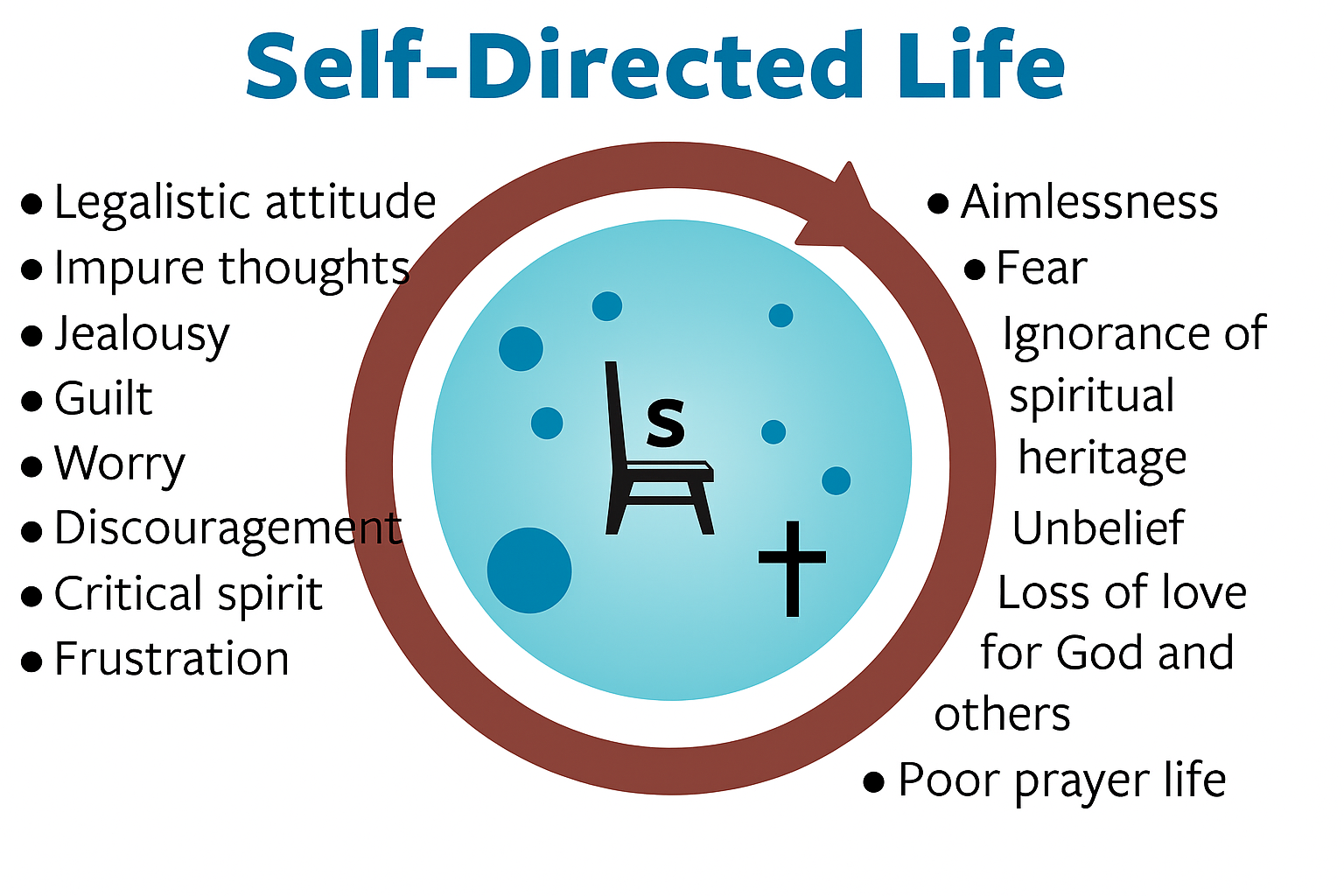
- Pride makes life revolve around self, not God
- Sin is more than wrongdoing—it is self at the center instead of God.
- Romans 1:24, 26, 28 – “God gave them up” to their own desires.
- Isaiah 53:6 – “All we like sheep have gone astray… every one to his own way.”
- Pride keeps self on the throne
- Symptoms: envy, immorality, gossip, arrogance, cruelty.
- Romans 1:29–31 – full list of sins flowing from rejecting God.
- Judges 21:25 – “Every man did that which was right in his own eyes.”
- Salvation is deliverance from self, not self-improvement (Galatians 2:20).
- Pride blinds the mind
- When God is dethroned (in the throne of your life), sin no longer looks like sin. (God is still sovereign and on His throne in heaven. He allows man to exercise freewill)
- Isaiah 5:20 – calling evil good, and good evil.
- Jeremiah 17:9 – “The heart is deceitful above all things, and desperately wicked.”
- 2 Corinthians 4:4 – “The god of this world hath blinded the minds of them which believe not.”
- Pride enslaves, but Christ frees
- Sin deceives us into thinking we are free.
- John 8:33–34 – “Whosoever committeth sin is the servant of sin.”
- Romans 6:16–18 – slaves of sin, but made free through obedience to Christ.
- Reconciliation requires redemption, not just forgiveness (Colossians 1:13–14).
- Only Christ restores God to His rightful place in our lives (Philippians 2:9–11).

Ang Tunay na Layunin ng Buhay

5 Susi sa Pag-unawa…
Ang Totoong Layunin sa Buhay
Maari ba kitang tanungin?
Ano ang pangunahing layunin mo sa buhay?
Naisip mo na ba ito?
Ang magtapos ng pag-aaral, magpakasal, o magpalaki ng mga anak ay hindi ang pangunahing layunin ng ating buhay. Mga mithiin lamang ito na umiikot sa tunay na layunin.
Hindi tayo nabubuhay para magtrabaho, kundi tayo ay nagtatrabaho upang mabuhay. Ngunit ano nga ba ang pangunahing layunin ng pamumuhay?
“Sapagka’t kayo’y binili sa halaga: luwalhatiin nga ninyo ang Dios sa inyong katawan, at sa inyong espiritu, na pawang sa Dios.” (1 Corinto 6:20)
1. May magandang layunin ang Diyos para sa iyong buhay
“Sapagka’t nalalaman ko ang mga pagiisip na aking iniisip tungkol sa inyo, sabi ng Panginoon, mga pagiisip ng kapayapaan, at hindi kasamaan, upang bigyan kayo ng pagasa sa inyong huling wakas.”
(Jeremias 29:11)
“Hindi pumaparito ang magnanakaw, kundi upang magnakaw, at pumatay, at pumuksa: ako’y naparito upang sila’y magkaroon ng buhay, at magkaroon ng kasaganaan.”
(Juan 10:10)
Ngunit bakit karamihan sa mga tao ay walang tamang layunin sa buhay?
2. Ang tao ay makasalanan
“Sapagka’t ang lahat ay nangagkasala nga, at hindi nakaabot sa kaluwalhatian ng Dios.”
(Roma 3:23)
“Gaya ng nasusulat, Walang matuwid, wala, wala kahit isa.”
(Roma 3:10)
“Tayong lahat na gaya ng mga tupa ay nangaligaw; tayo’y tumungo bawa’t isa sa kanikaniyang daan; at ipinasan sa kaniya ng Panginoon ang kasamaan nating lahat.”
(Isaias 53:6)
3. May kaparusahan ang kasalanan
“Sapagka’t ang kabayaran ng kasalanan ay kamatayan; datapuwa’t ang kaloob na walang bayad ng Dios ay buhay na walang hanggan kay Cristo Jesus na Panginoon natin.”
(Roma 6:23)
“Nguni’t sa mga duwag, at sa mga hindi mananampalataya, at sa mga kasuklamsuklam, at sa mga mamamatay tao, at sa mga mapakiapid, at sa mga manggagaway, at sa mga mananamba sa diosdiosan, at sa lahat ng mga sinungaling, ang kanilang bahagi ay sa dagatdagatang nagniningas sa apoy at asupre; na siyang ikalawang kamatayan.”
(Apocalipsis 21:8)
4. Si Jesus lamang ang tanging lunas sa kasalanan ng tao
“Sapagka’t gayon na lamang ang pagsinta ng Dios sa sanglibutan, na ibinigay niya ang kaniyang bugtong na Anak, upang ang sinomang sa kaniya’y sumampalataya ay huwag mapahamak, kundi magkaroon ng buhay na walang hanggan.”
(Juan 3:16)
“At halos lahat ng mga bagay ay nililinis ng dugo ayon sa kautusan, at kung walang pagdanak ng dugo ay walang kapatawaran.”
(Hebreo 9:22)
“Lubha pa nga, ngayong inaring-ganap sa pamamagitan ng kaniyang dugo, ay mangaliligtas tayo sa galit ng Dios sa pamamagitan niya.”
(Roma 5:9)
5. Dapat natin Siyang tanggapin bilang personal na Panginoon at Tagapagligtas
“Datapuwa’t ang lahat ng sa kaniya’y nagsitanggap, ay pinagkalooban niya sila ng karapatang maging mga anak ng Dios, sa makatuwid baga’y sa mga nagsisisampalataya sa kaniyang pangalan.”
(Juan 1:12)
“Sapagka’t sa biyaya kayo’y nangaligtas sa pamamagitan ng pananampalataya; at ito’y hindi sa inyong sarili, ito’y kaloob ng Dios.”
(Efeso 2:8)
“Sinasabi ko sa inyo: Hindi! kundi kung hindi kayo mangagsisi, ay mangalilipol kayong lahat sa gayon ding paraan.”
(Lucas 13:3)
Paul’s Thanksgiving and Prayers
Bible Study on Philippians 1
Key Verse
Philippians 1:27 – “Only let your conversation be as it becometh the gospel of Christ: that whether I come and see you, or else be absent, I may hear of your affairs, that ye stand fast in one spirit, with one mind striving together for the faith of the gospel.”
—
Background
Written by Paul with Timothy (v.1).
Addressed to all the saints in Philippi, with the bishops and deacons.
—
Paul’s Thanksgiving and Prayer (vv.3–11)
1. Remembrance and Gratitude (v.3)
He remembered them and thanked God for them.
2. Prayer for All (v.4)
He prayed for them with joy.
Requests included love, knowledge, and growth.
3. Thankful for Their Fellowship (vv.5–7)
Reasons for fellowship: the Gospel.
Consistency of their partnership.
4. Paul’s Confidence (v.6)
Faith toward God working in them.
Confidence in them because of Christ’s work.
—
Paul’s Prayer Requests (vv.9–11)
1. Love may abound more and more.
2. Grow in knowledge and sound judgment.
3. Approve things excellent (v.10).
4. Be sincere (Joshua 24).
5. Be without offense until the day of Christ.
Not sinless perfection, but walking in the Spirit.
6. Be filled with fruits of righteousness (v.11).
By Jesus Christ.
To the glory and praise of God.
—
Paul’s Testimony of Suffering for Christ (vv.12–20)
1. His suffering led to the furtherance of the Gospel (vv.12–14).
Willingness to suffer.
His zeal to preach led to imprisonment.
His courage encouraged others.
His sincerity influenced others.
2. Others were made bold to speak the Word (vv.14, 20).
Without fear.
Recognizing fear as a hindrance.
—
Application
The Christian life is marked by gratitude, prayer, confidence in God’s work, and perseverance in the Gospel.
Suffering can become a testimony that advances the Gospel.
True fellowship in Christ means striving together with one mind and spirit.
We are called to grow in love, knowledge, sincerity, and fruitfulness for the glory of God.
 STEP BY STEP